Best Barefoot Boots for Hiking (With Good Grip) (2026 Guide)
[Full disclosure: I sometimes use AI as a research assistant to help me gather information. Some links provided are affiliate partners that help me fund the maintenance of this site.]
👉 New to barefoot shoes? Start here first:
→ Best Barefoot Shoes for Beginners
📋 TL;DR:
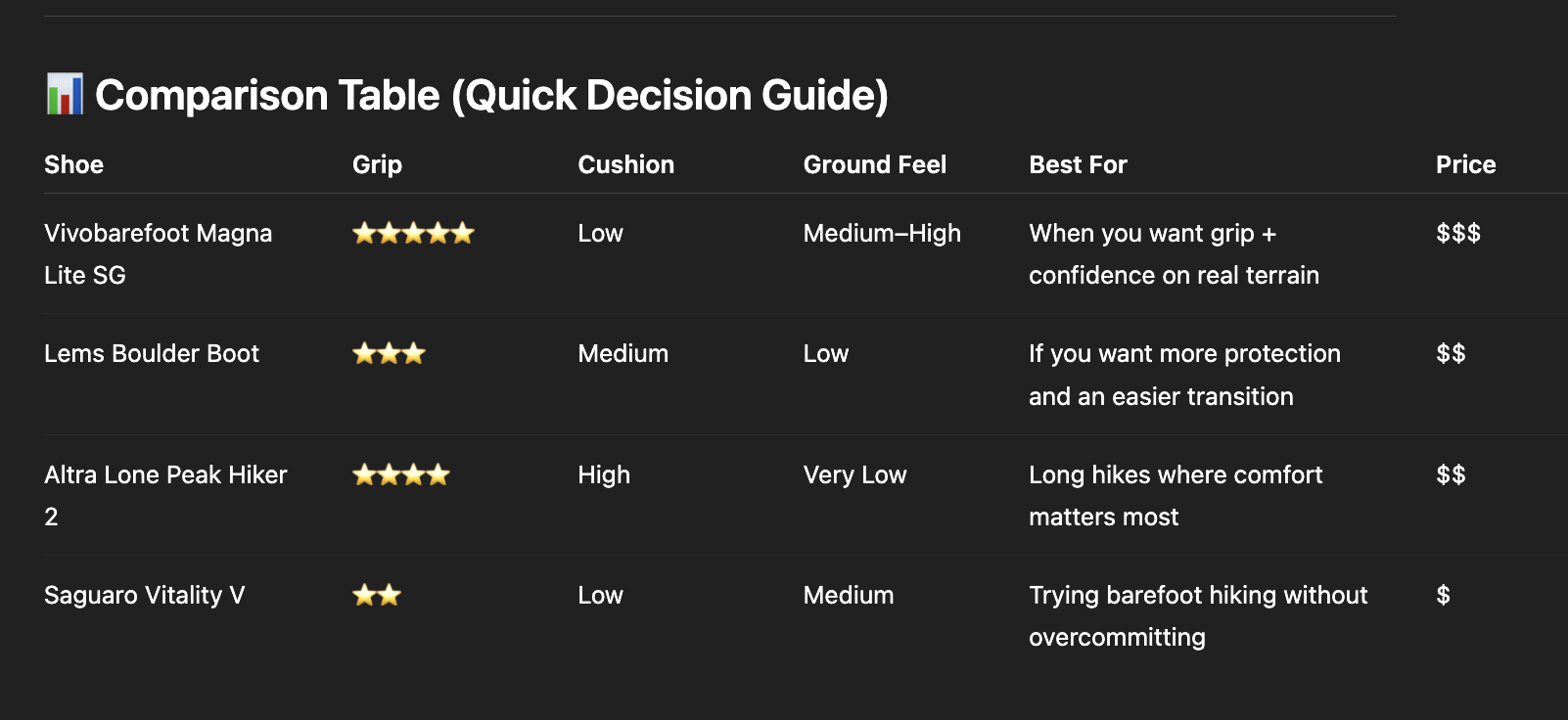
Best overall (grip + confidence) → Vivobarefoot Magna Lite SG
More protection (boot feel) → Lems Boulder Boot
Comfort for long hikes → Altra Lone Peak Hiker 2
Budget option → Saguaro Vitality V
Barefoot hiking feels incredible…when your shoes can actually handle the terrain.
Actually being able to feel the ground, roots, rocks, and more while hiking in nature one of my favourite things about going barefoot.
You’ll see a lot of “best barefoot hiking shoes” lists—but once you actually take them on real trails, you notice something quickly:
A lot of barefoot shoes and boots don’t have great grip.
And that matters more than anything when you’re on terrain like loose gravel, wet rock, steep descents, and more.
If your outsole isn’t solid, you’re going to feel it.
This guide focuses on what actually matters:
Grip
Stability
The right level of protection
Because with barefoot hiking, it’s not about having less shoe.
It’s about having:
Just enough protection + the right traction + barefoot feel.
🧠 Boots vs Shoes (What Should You Choose?)
Before getting into specific options, this matters:
Barefoot Hiking Boots
More ankle coverage
Better for rough / technical terrain
Often slightly more protective
👉 Best for:
Longer hikes
Uneven terrain
Carrying weight
Barefoot Hiking Shoes
Lighter
More flexible
More ground feel
👉 Best for:
Easier trails
Faster movement
Experienced users
Drier terrain
Neither is “better”—it depends on your terrain and experience.
🧠 What Actually Matters (More Than Anything Else)
1. Grip (This is the real differentiator)
This is where most barefoot hiking boots fall short. It took me a long time to find boots that I liked in terms of barefoot feel AND that had exceptional grip that made me feel secure on trails.
You want:
Aggressive tread
Reliable traction on wet surfaces
Confidence on descents
Good grip = confidence
Bad grip = hesitation (or worse… slipping)
2. Protection (Balanced, Not Maxed Out)
You need:
Some protection from rocks
Waterproofing (sometimes)
But still:
Flexibility
Responsiveness
3. Ground Feel (With Control)
You want to:
Feel the terrain
Adjust your movement
…but not feel every sharp rock.
Have wide feet? Read this:
👉 Best Barefoot Shoes for Wide Feet (2026 Guide)
🟢 Best Overall
🥇 Best Overall (Grip + Performance + Lightweight)
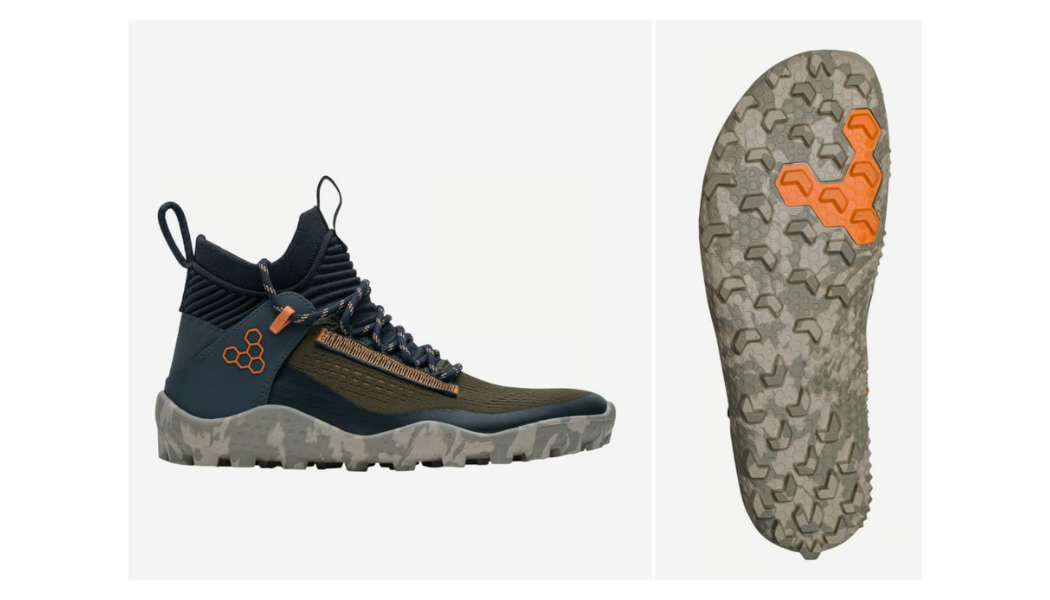
Vivobarefoot Magna Lite SG
Vivobarefoot Magna Lite SG Hiking Boots
This is the one that stands out the most.
Not just because it’s “barefoot”… but because it actually performs on real terrain.
Why it’s different:
Excellent grip (this is the big one)
Aggressive outsole that handles loose + wet terrain
Lightweight but still protective
Flexible enough to feel connected
👉 This is the shoe where barefoot hiking actually feels right.
If grip is your priority (and it should be), and you want a balance of a barefoot boot that is lightweight this is hard to beat.
🥈 Best for More Protection and Cushioning (Comfort + Distance)
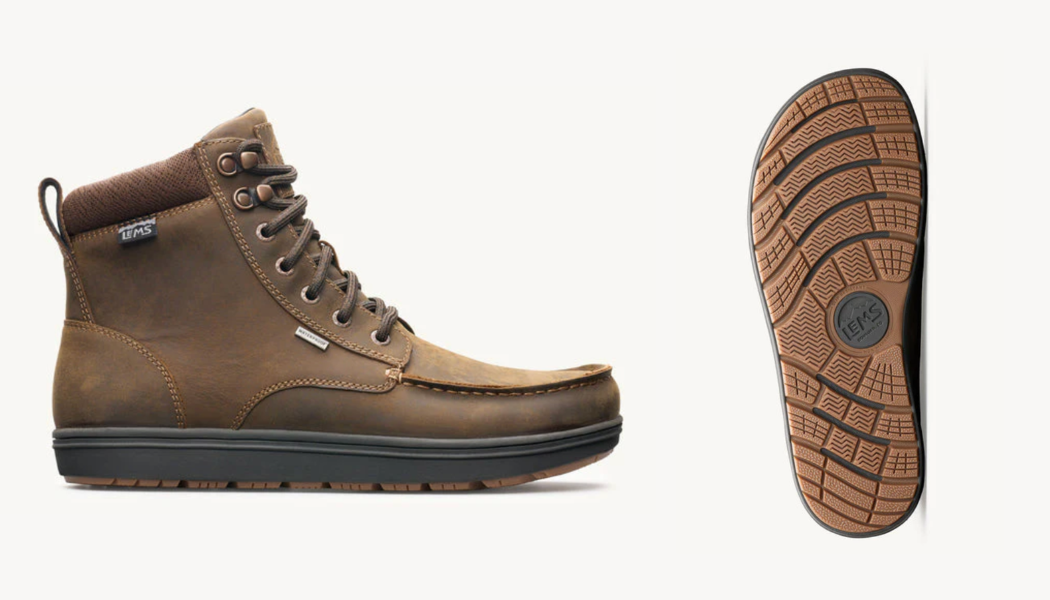
Lems Boulder Boot
Lems Boulder Boot
Thicker sole
More structure
Still zero drop
👉 Great if you:
Want more protection
Are newer to barefoot
Hike longer distances
Tradeoff:
Less ground feel
Less aggressive grip than Vivo
🥉 Best for More Cushioning (Comfort + Distance)
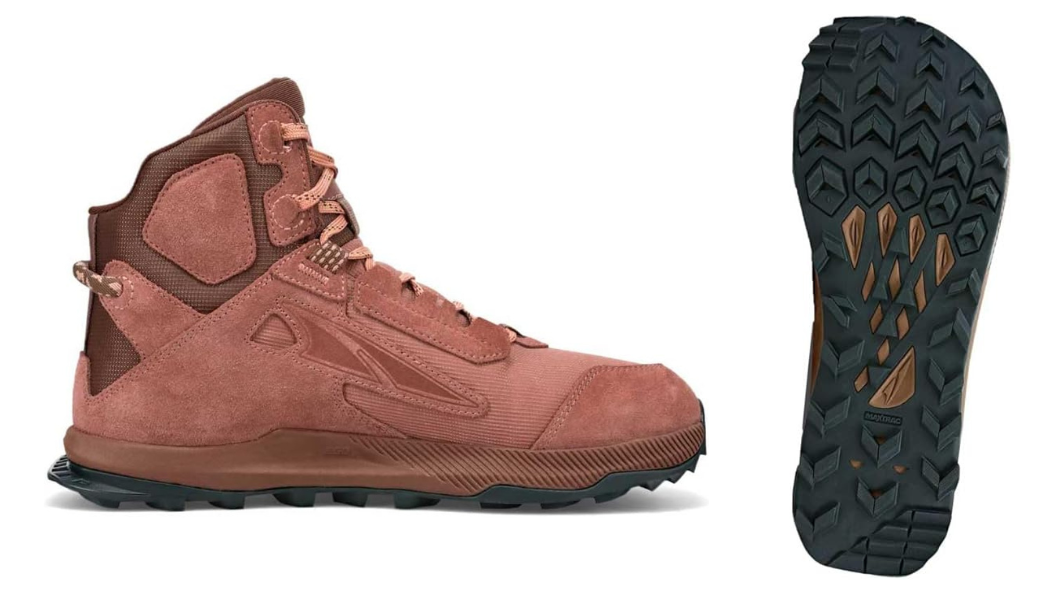
Altra Lone Peak Hiker 2
Altra Lone Peak Hiker 2
Zero drop
Cushioned
Foot-shaped design
Built specifically as a hiking boot
👉 Best for:
Longer hikes
Comfort over distance
People who want a more traditional “boot feel”
Aesthetics - they come in some fun colours
Tradeoff:
Grip is solid but not as aggressive as Vivobarefoot
Less ground feel
💰 Best Budget Option
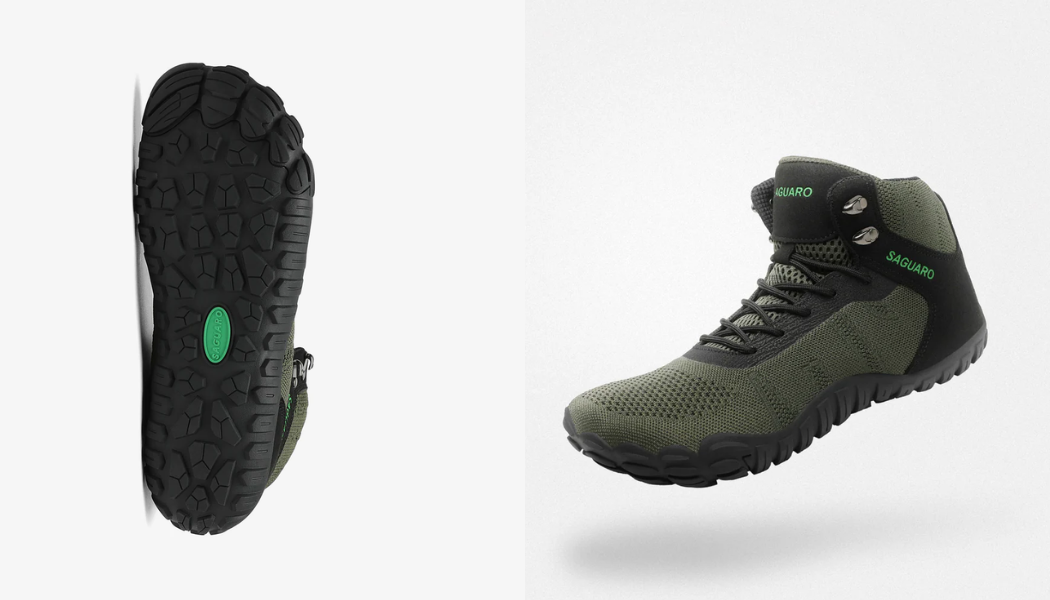
Saguaro Vitality V
Saguaro Vitality V
Wide toe box
Flexible sole
Very lightweight
One of the most affordable ways to try barefoot hiking
👉 Best for:
Light trails
Casual hiking
Testing barefoot shoes without overcommitting
Why this one specifically:
The Vitality V is one of the more usable Saguaro options for outdoor use—it’s simple, flexible, and gets the job done if you’re just getting started.
Tradeoff:
Grip can be inconsistent on technical terrain
Less durability than higher-end options
⚠️ Common Mistakes with Barefoot Hiking
1. Ignoring grip
This is the biggest one.
A shoe can feel great on flat ground, but completely fail on a real trail.
2. Going too minimal too fast
Hiking adds:
Load
Terrain
Unpredictability
👉 Build up gradually
3. Choosing based on looks
Some shoes look “trail-ready” but don’t perform when it matters
🦶 What You Might Notice
With the right shoe:
You feel more stable
You move more intentionally
You trust your footing more
And that changes the entire experience.
🧭 Final Thought
Barefoot hiking isn’t about having less shoe.
It’s about having:
the right grip
the right balance
and the ability to move naturally
If your shoe can’t handle the terrain, nothing else matters.
👉 Still unsure what to choose?
Best overall (grip + confidence) → Vivobarefoot Magna Lite SG
More protection (boot feel) → Lems Boulder Boot
Comfort for long hikes → Altra Lone Peak Hiker 2
Budget option → Saguaro Vitality V
📖 READ MORE:
Best Barefoot Shoes for Beginners (2026 Guide)
Best Barefoot Shoes for Wide Feet (2026 Guide)
Best Barefoot Shoes That Don’t Look Like Barefoot Shoes (2026 Guide)
Best Barefoot Shoes for Your Foot Shape (2026 Guide)
Best Barefoot Shoes for Walking (2026 Guide)
Best Barefoot Sandals (2026 Guide)
Best Barefoot Shoes for Travel (2026 Guide)
Best Barefoot Shoes for Work and Business (2026 Guide)
Why It’s Important for Barefoot Shoes to Fit Your Foot Shape